Summer is here again and so is the tragedy of unnecessary death by design: A 10 year old girl was killed while cycling to school while crossing a junction on a green light by a right turning truck who also had a green light!
Media interest is again on cycling and luckily the role of infrastructure design is starting to emerge. Thanks to Chris Cummins who did a great article and radio show intro.
Looking at the design of the junction from a Dutch design perspective everything is wrong.
Basic Principle 1: Function.
Mix of very busy thought route for motor traffic and a main cycling route to a school!
Basic Principle 2: Homogeneity.
Fast right turning motor vehicles including massive trucks mix regularly with crossing pedestrians, cyclists and kids on scooters etc...
Basic Principle 3: Predictability.
A massive 4 lane (in one direction!) main road turns into another main road with large curve radius and green light and little indication that the drivers should slow and be very careful of crossing vulnerable road users who have right of way.
Basic Principle 4: Forgivingness
Zero forgiveness in a conflict between a truck and 10 year old child.
Basic Principle 5: State awareness
Huge junction and both the driver and child had a green light so both were clearly unaware of the immense danger present in the situation.
This junction is not particularly unusual for Vienna. Before we talk about details of design and safety we got to get the very basics right. Until that happens this is going to happen again and again and again....
Wednesday, 1 June 2016
Wednesday, 1 July 2015
3 dead Austrian cycists under trucks in 5 days.
It has been a terrible week for cycling in Austria. If there is anything positive to come of this then this statistical anomaly needs to be used to generate interest in reducing the number of accidents of this nature that happen.
One of these accident is clearly a result of terrible design. The other 2 seam to be a simple inevitable result of mixing trucks and cyclists together. When a truck driver makes a mistake the cyclists has no chance. The only lesson to learn from this is that even perfect vehicular cycling positioning in the middle of a roundabout can not protect you from a SMIDSY (Sorry Mate I Didn't See You).
Separation of trucks and bike traffic by time or space seams to be the only systematic measure that will help reduce these types of mixing mistakes. This can be done by route, traffic light, operational time restrictions, protected lanes etc...
Behaviour and technique can help when separation fails. However education and behaviour campaigns should not be seen as a primary strategy just because they are cheap. They have a value but only as a last resort.
Here is some good last resort advice:
One of these accident is clearly a result of terrible design. The other 2 seam to be a simple inevitable result of mixing trucks and cyclists together. When a truck driver makes a mistake the cyclists has no chance. The only lesson to learn from this is that even perfect vehicular cycling positioning in the middle of a roundabout can not protect you from a SMIDSY (Sorry Mate I Didn't See You).
Separation of trucks and bike traffic by time or space seams to be the only systematic measure that will help reduce these types of mixing mistakes. This can be done by route, traffic light, operational time restrictions, protected lanes etc...
Behaviour and technique can help when separation fails. However education and behaviour campaigns should not be seen as a primary strategy just because they are cheap. They have a value but only as a last resort.
Here is some good last resort advice:
"Always remember; if the truck is ahead, stay back.
If the truck is behind, get ahead.
In a nutshell, try to put as much clear space between yourself and any large vehicles at junctions as you safely can."
Tuesday, 30 June 2015
Death as a result of design.
The world has been reading about the terrible death rate of young women on bikes killed by truck drivers at junctions in London. Unfortunately
Austria has been forced to talk about safety after there were 2 of these
type of accidents on one day. Information here and here. These together with a fatal accident involving a truck, young woman and a junction last year
are at last forcing discussion of Austrian Best Practice road design at
Junctions.
The accident at Wiener Hauptbahnhof happened here:
As I understand it from the news report a truck and cyclists were waiting at red lights and when the lights changed to green the truck turned right and rolled over the cyclist who was going straight ahead.
This very predictable situation happened at a brand new junction built to Austrian best practice that frankly is is total and utter crap.
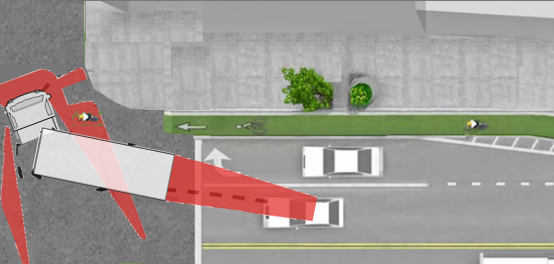
Here is a sketch of the situation including the truck's blind spots.
These type of accidents are clearly happening too often and are clearly a design problem.
Of course there are plenty of fit male experienced cyclists who are happy to blame the victim of this design for not being as awesome as they are. Their advice and coping strategies can be helpful on an individual level but they are extremely unhelpful at getting the system fixed if we can only blame the individual user.
Just like the adoption of seat belts in cars we need the adoption of proven systematic solutions to systematic problems. It is clearly a systematic international problem that is not being addressed properly.
Using the graphic Mark used to try and explain a type of Dutch junction design in 2011 and an image of a trucks blind spot we can see that this design seems to be better for the truck driver and cyclists.
Junction design is complex and appropriate professional standards need to be developed. This is not easy but copying the best answers to date should be possible for most professionals I would hope.
Austrian Cycle groups have not been too interested in this issue up until now and their main demand is for bike Boxes (or ASLs) and other useless paint which will only increase this problem to London levels where useless paint and mixing is standard.
For more information about these type of junctions (which are only appropriate for use at certain types of junction) please follow these links:
https://bicycledutch.wordpress.com/.../state-of-the-art.../
https://bicycledutch.wordpress.com/.../junction-design.../
http://www.protectedintersection.com/
The accident at Wiener Hauptbahnhof happened here:

As I understand it from the news report a truck and cyclists were waiting at red lights and when the lights changed to green the truck turned right and rolled over the cyclist who was going straight ahead.
This very predictable situation happened at a brand new junction built to Austrian best practice that frankly is is total and utter crap.
Here is a sketch of the situation including the truck's blind spots.
These type of accidents are clearly happening too often and are clearly a design problem.
Of course there are plenty of fit male experienced cyclists who are happy to blame the victim of this design for not being as awesome as they are. Their advice and coping strategies can be helpful on an individual level but they are extremely unhelpful at getting the system fixed if we can only blame the individual user.
Just like the adoption of seat belts in cars we need the adoption of proven systematic solutions to systematic problems. It is clearly a systematic international problem that is not being addressed properly.
Using the graphic Mark used to try and explain a type of Dutch junction design in 2011 and an image of a trucks blind spot we can see that this design seems to be better for the truck driver and cyclists.
Junction design is complex and appropriate professional standards need to be developed. This is not easy but copying the best answers to date should be possible for most professionals I would hope.
Austrian Cycle groups have not been too interested in this issue up until now and their main demand is for bike Boxes (or ASLs) and other useless paint which will only increase this problem to London levels where useless paint and mixing is standard.
For more information about these type of junctions (which are only appropriate for use at certain types of junction) please follow these links:
https://bicycledutch.wordpress.com/.../state-of-the-art.../
https://bicycledutch.wordpress.com/.../junction-design.../
http://www.protectedintersection.com/
Sunday, 31 May 2015
Shifting blame to the victims of bad design.
I wrote about this particular junction a year ago. There have been numerous attempts to communicate the danger here by various groups who have also offered good solutions but after much consideration the "solution" is to change the signs. The signs were being ignored so now the signs have been changed so that the legal consequences of ignoring the signs is shifted to the victims of this dangerous junction. This will change nothing and there will continue to be danger, accidents, arguments and conflict at this junction.
This video I found on the internet explains the problem much better than I could..
Austria has consistently twice the kill rate per capita on it roads compared to the Netherlands despite the Netherlands having a large number of vulnerable road users. The planners whose incompetence kills ~250 people a year (more than would be killed if NL planners did the design) are not interested in learning best practice. They are interested in shifting blame to the victims of their bad design. This is not an acceptable solution in my opinion.
Wednesday, 29 April 2015
150 years of change on the Ringstraße
The Greens have initialized a discussion about the 150 year old RingStraße. They presented 2 proposals and no doubt the discussion will quickly develop into pathetic polarizing Vienna politics, but before it does lets think a little.
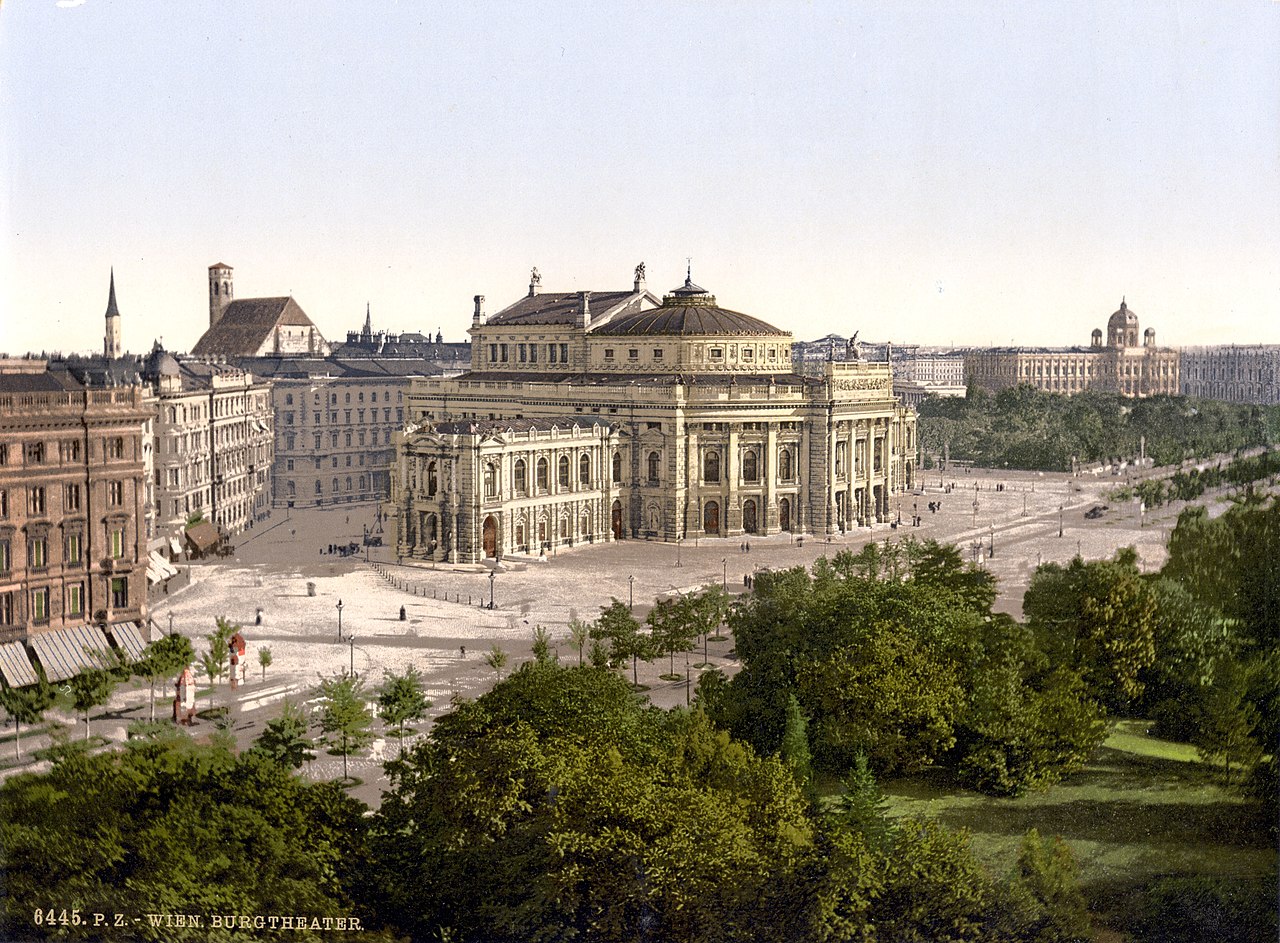
This is the ring 115 years ago.
As more and more cars used it it developed into a 2 way street and then a one way 3 (or 4) lane ring road.
It is still a wonderful avenue that has adapted well, mainly due to its huge width. The huge amount of space is a result of the old City defences that required a clear shooting plane. This space has many functions and is dominated by the huge number of pedestrians and the 3 lane ring road of motor traffic.
Cycling has been squeezed in too, after the car parking, tram lines and through traffic etc... This was mainly at the expense of the pedestrians. There have been improvements recently to small sections and in some parts it is wonderful for cycling but there is a lot of conflict between cyclists and pedestrians who are squeezed together while cars take up to 10 lanes of the space. (There is a very good assessment of the Ring in this book.)
The City of Vienna have a target of halving car use in the next 10 years and promoting cycling, walking and public transport. So it is clear that going forward the balance of space allocation has to change and my survey 3 years ago showed how nearly everyone was interested in the discussion and most were very open to the idea of change.
The 2 proposals presented by the greens are good and speak for themselves. We could argue about details (and probably will - cycle paths are too narrow...) but generally speaking they are sensible and the kind of professional work you would expect to get from a good urban design consultancy.
How would I Crowize the Ring?
I will oversimplify this so that this post is not too boring and even more long winded. I will take a more evolutionary approach than the utopia design renderings which never have any cars on them. I would do this in stages that could be done independently or in parallel.
Stage one (Do the bloody obvious on the inside).
On the inside of the ring I would make a continuous cyclepath in the middle of the 3 lane footpaths (like the wonderful section at the Stadpark on the outside of the Ring). This is illustrated in the Northern part above. If there was a sausage stand in the way I would move the sausage stand or modify the U-Bahn exit... The result must me a clear continuous through route for cylce traffic that is distinct from the pedestrian areas.
I would continue this lane where there is a side road on the parking lane. The loss of parking space could easily be created on the inner central lane on a part time or per section basis. (I know that putting parking on a 3 lane motor way is really really bad design but it is common in Vienna so why not. Someone else can write a blog about the bad design for cars in Vienna)
Junctions would have space for turning cars to wait and cross the cycle path and pedestrians crossings at 90 degress without the pressure of the tram ramming them. These junctions would be designed to be like a pedestrian zone and motor car movements in and out of the center would be reduced as much as possible.
Stage 2. (Do the complicated outside.)
The outside is more complicated. There I would do a combination of the cycle path illustrated above on the southern side of the drawing and a mix side street solution illustrated below.
Stage 3 (2 way traffic in the centre)
Then I would change the central 3 lanes into a 2 lane 2 way road and redesign the junctions. This would create a less motorway feel to the road and make distances sorter and more direct but slower for cars. Car parking could also be made available in the central lanes to remove it from the side streets.
Throughout all these stages there would be opportunities to humanize the side roads and create nice spaces in sections. The above I believe to be a pragmatic incremental approach that would allow surrounding roads to also be adapted to the shifting traffic patterns.
The Ring is 150 years old and in another 150 years we will be extinct if we continue as we have for the last 150 years. You can argue all day long about change but you can not argue with Maths. Change in our world is exponential and so things chance faster and faster. The people that say you can not change things are normally really saying "they do not know how to change things". However if we want to change things for the better then we can not shy away from the discussion.
This is the ring 115 years ago.
As more and more cars used it it developed into a 2 way street and then a one way 3 (or 4) lane ring road.
It is still a wonderful avenue that has adapted well, mainly due to its huge width. The huge amount of space is a result of the old City defences that required a clear shooting plane. This space has many functions and is dominated by the huge number of pedestrians and the 3 lane ring road of motor traffic.
Cycling has been squeezed in too, after the car parking, tram lines and through traffic etc... This was mainly at the expense of the pedestrians. There have been improvements recently to small sections and in some parts it is wonderful for cycling but there is a lot of conflict between cyclists and pedestrians who are squeezed together while cars take up to 10 lanes of the space. (There is a very good assessment of the Ring in this book.)
The City of Vienna have a target of halving car use in the next 10 years and promoting cycling, walking and public transport. So it is clear that going forward the balance of space allocation has to change and my survey 3 years ago showed how nearly everyone was interested in the discussion and most were very open to the idea of change.
The 2 proposals presented by the greens are good and speak for themselves. We could argue about details (and probably will - cycle paths are too narrow...) but generally speaking they are sensible and the kind of professional work you would expect to get from a good urban design consultancy.
How would I Crowize the Ring?
I will oversimplify this so that this post is not too boring and even more long winded. I will take a more evolutionary approach than the utopia design renderings which never have any cars on them. I would do this in stages that could be done independently or in parallel.
Stage one (Do the bloody obvious on the inside).
On the inside of the ring I would make a continuous cyclepath in the middle of the 3 lane footpaths (like the wonderful section at the Stadpark on the outside of the Ring). This is illustrated in the Northern part above. If there was a sausage stand in the way I would move the sausage stand or modify the U-Bahn exit... The result must me a clear continuous through route for cylce traffic that is distinct from the pedestrian areas.
I would continue this lane where there is a side road on the parking lane. The loss of parking space could easily be created on the inner central lane on a part time or per section basis. (I know that putting parking on a 3 lane motor way is really really bad design but it is common in Vienna so why not. Someone else can write a blog about the bad design for cars in Vienna)
Junctions would have space for turning cars to wait and cross the cycle path and pedestrians crossings at 90 degress without the pressure of the tram ramming them. These junctions would be designed to be like a pedestrian zone and motor car movements in and out of the center would be reduced as much as possible.
Stage 2. (Do the complicated outside.)
The outside is more complicated. There I would do a combination of the cycle path illustrated above on the southern side of the drawing and a mix side street solution illustrated below.
Stage 3 (2 way traffic in the centre)
Then I would change the central 3 lanes into a 2 lane 2 way road and redesign the junctions. This would create a less motorway feel to the road and make distances sorter and more direct but slower for cars. Car parking could also be made available in the central lanes to remove it from the side streets.
Throughout all these stages there would be opportunities to humanize the side roads and create nice spaces in sections. The above I believe to be a pragmatic incremental approach that would allow surrounding roads to also be adapted to the shifting traffic patterns.
The Ring is 150 years old and in another 150 years we will be extinct if we continue as we have for the last 150 years. You can argue all day long about change but you can not argue with Maths. Change in our world is exponential and so things chance faster and faster. The people that say you can not change things are normally really saying "they do not know how to change things". However if we want to change things for the better then we can not shy away from the discussion.
Friday, 6 March 2015
Are Road Designers Trying to Kill Cyclists?
This is a picture I saw recently where the UK Police illustrate the blind spots of trucks.
REF: http://www.crossrail.co.uk/construction/road-safety-information/lorry-driver-training
Cycle training literature says "
There is no doubt that biking in the door zone is unsafe and even deadly."
REF: http://washcycle.typepad.com/home/2005/11/bike_lanes_in_t.html
Lucky Road designers clearly mark these no go areas of the road with bright paint and cycle logos so show cyclists not to ride there. However as you can see from this picture some cyclists are confused by these no go warning signs.
REF: http://www.fahrradwien.at/blog/2013/09/06/mehr_sicherheit_durch_bikeboxen_in_wien/
So despite the good intentions to warn cyclists not to ride in these no go danger zones the markings cycle planners are using are confusing and one could easily conclude they are trying to kill cyclists.
REF: http://www.crossrail.co.uk/construction/road-safety-information/lorry-driver-training
Cycle training literature says "
REF: http://washcycle.typepad.com/home/2005/11/bike_lanes_in_t.html
Lucky Road designers clearly mark these no go areas of the road with bright paint and cycle logos so show cyclists not to ride there. However as you can see from this picture some cyclists are confused by these no go warning signs.
REF: http://www.fahrradwien.at/blog/2013/09/06/mehr_sicherheit_durch_bikeboxen_in_wien/
So despite the good intentions to warn cyclists not to ride in these no go danger zones the markings cycle planners are using are confusing and one could easily conclude they are trying to kill cyclists.
Thursday, 4 December 2014
Group Think
We have economic, health, climate, energy and environmental issues and need solutions that will help us work very quickly to a carbon negative, more equal society before we go into climate or 3rd world resource war meltdown and the inevitable human race extinction that will follow. The maths of exponential growth and change, mean things are going to change dramatically. The only thing we can choose is in which direction things go dramatically.
Often people tell me that technology will solve these problems but there are sustainable solutions out there and cycling is one of the blatantly obvious ones. It is a proven technology that has many lifestyle, health, time, space, cost, equality, efficiency and environmental benefits. It is a golden bullet that is also fun. All we have to do is facilitate it using tried and tested established real world models and professional published public domain knowledge.
Unfortunately there seams to be some kind of human Group Think dynamics which leave us helpless and paralysed in the business as usual model. If we can not get urban transport right quickly facilitating the cycling golden bullet what chance do we have of dealing with complex problems associated with the economy, deforestation, energy, immigration etc...
Every time I try to explain to someone outside cycling why it is important to facilitate cycling in urban spaces as an option for normal people I have to hear:
"- we all have to behave it is a culture problem.
- who will pay for it.
- cyclist do not obey the law.
- helmets / dangerous / red lights...
- the Greens.
- the MaHü......
.... it is normal you and can not change it."
The following Video is not going to maintain complex life on this planet on it own but it could be a start. It is an attempt to show different perspectives and that creating conflict with the current road designs and expecting road users to work it out amongst themselves is not going to increase cycling into the main stream and create enough modal shift towards cycling to make any difference worth bothering with. It is a gentle respectful suggestion that cyclists need to be taken more seriously and not used as human powered traffic calming devices. I think Bernhard of the City Cycling School did a great job of trying to build bridges between the groups, or at least point out that the conflict between them on this bridge is a direct result of the road design.
It and some good work from local activists together with local politicians and planners who listened to concerns has resulted in a solution:

They put up a warning sign.....
OK it is a quick temporary response but it is NOT a long term solution, and not even a solution of any kind other than an acknowledgement of a problem but at least it did not make things worse.
Looking to the longer term (ie. before we cook ourselves on the only planet we have) Vienna has developed ambitions targets with vague meaningless words that are open to interpretation compromise and the same old business as usual model approach. It all sounds good but what does it really mean? Is it the low hanging fruit of mobility where every new road modification is used to implement Dutch quality cycling infrastructure? I worry that "miteinander mobil" means more human powered traffic calming like this un-workable result of group think from the cycle lobby.
The cycle lobby is determined to keep trying to change the behavior of other groups as a solution to their problem.
The media enjoy escalating the conflict between groups to attract more audience.
The politicians tell each group what they want to hear.
The planners follow their guides which based on 30 year old knowledge.
The Police try to enforce incomprehensible laws.
The world keeps turning and getting hotter.
If we are so stupid that we remain trapped in our man made systems of group think then at some point not too far away we will see change forced upon us at a rate that will make us realize that the word "sustainable" really means "not all going to die in the foreseeable future".
Often people tell me that technology will solve these problems but there are sustainable solutions out there and cycling is one of the blatantly obvious ones. It is a proven technology that has many lifestyle, health, time, space, cost, equality, efficiency and environmental benefits. It is a golden bullet that is also fun. All we have to do is facilitate it using tried and tested established real world models and professional published public domain knowledge.
Unfortunately there seams to be some kind of human Group Think dynamics which leave us helpless and paralysed in the business as usual model. If we can not get urban transport right quickly facilitating the cycling golden bullet what chance do we have of dealing with complex problems associated with the economy, deforestation, energy, immigration etc...
Every time I try to explain to someone outside cycling why it is important to facilitate cycling in urban spaces as an option for normal people I have to hear:
"- we all have to behave it is a culture problem.
- who will pay for it.
- cyclist do not obey the law.
- helmets / dangerous / red lights...
- the Greens.
- the MaHü......
.... it is normal you and can not change it."
The following Video is not going to maintain complex life on this planet on it own but it could be a start. It is an attempt to show different perspectives and that creating conflict with the current road designs and expecting road users to work it out amongst themselves is not going to increase cycling into the main stream and create enough modal shift towards cycling to make any difference worth bothering with. It is a gentle respectful suggestion that cyclists need to be taken more seriously and not used as human powered traffic calming devices. I think Bernhard of the City Cycling School did a great job of trying to build bridges between the groups, or at least point out that the conflict between them on this bridge is a direct result of the road design.
It and some good work from local activists together with local politicians and planners who listened to concerns has resulted in a solution:

They put up a warning sign.....
OK it is a quick temporary response but it is NOT a long term solution, and not even a solution of any kind other than an acknowledgement of a problem but at least it did not make things worse.
Looking to the longer term (ie. before we cook ourselves on the only planet we have) Vienna has developed ambitions targets with vague meaningless words that are open to interpretation compromise and the same old business as usual model approach. It all sounds good but what does it really mean? Is it the low hanging fruit of mobility where every new road modification is used to implement Dutch quality cycling infrastructure? I worry that "miteinander mobil" means more human powered traffic calming like this un-workable result of group think from the cycle lobby.
The cycle lobby is determined to keep trying to change the behavior of other groups as a solution to their problem.
The media enjoy escalating the conflict between groups to attract more audience.
The politicians tell each group what they want to hear.
The planners follow their guides which based on 30 year old knowledge.
The Police try to enforce incomprehensible laws.
The world keeps turning and getting hotter.
If we are so stupid that we remain trapped in our man made systems of group think then at some point not too far away we will see change forced upon us at a rate that will make us realize that the word "sustainable" really means "not all going to die in the foreseeable future".
Friday, 5 September 2014
Rennweg/Ungargasse/Fasangasse
If ever there was a junction that was a total mess it is this
junction. It has recently been redesigned to Vienna best practice to
accommodate cycling.
It is part of the Vienna main cycle route network (solid red lines) which goes diagonally across it. However there are gaps (to put in nicely) so getting across here involved illegal and creative use of the road and footpath. It was interesting to see all the junction free-styling that went on here because every time I thought I knew all possible ways of coping with this junction someone would surprise me with a new way...
It was an appalling design for cycling and the new design seams to be no more than basically painted on guides for some of the free-style moves. The new design will not stop illegal behaviour because cyclists will go with the first green light to get diagonally across the two stage stop diagonal crossing. So this means half the time they will go anti-clockwise (sort of legal) and half the time anticlockwise (illegal) around. The new design is confusing and creates dangerous conflict merge point just after the junction on Rennweg in both directions.
Lets remember that Vienna is a city that wants to half motor car use and promote cycling. If we areto take these claims seriously then we need more than confusing conflict inducing paint.
What I would like to do is explain why I think this mess was created and how I would try to pragmatically solve the issues better in a cost effective way. I am sure there are many many solutions and I would love to post some options here from others if they propose them.
In order maximize the motor traffic capacity of a junction it is common for right turning motor traffic to have a green light at the same time a pedestrians get a green light to cross the road that the motor traffic is turning into. This is a bit dangerous but speeds are low and it does increase the motor traffic capacity of the junction if pedestrian numbers are low. However on a junction like this where there are a lot of pedestrians the turning motor traffic can not turn and is blocked by a stream of pedestrians. This means that extra queueing lanes are required going into the junction so that straight ahead motor traffic does not get blocked by the right turning traffic that is blocked by a stream of pedestrians it can not force it's way through. The requirement for as many queueing lanes into a junction means that all space available is consumed by queuing traffic lanes, (in this case up to 3 lanes!)
Through traffic is restricted in its turning movements on the junction to minimise left turning conflict with the trams and to further increase the capacity of the junction for motor traffic by using the surrounding small streets. This means that we end up with the ridicules through road Jacquingasse. This is a though road that has motor traffic funnelled on to it, It is unrestricted along its length with traffic lights and to slow down this rat run there are at least 2 large speed bumps. If you have thought traffic and speed bumps then you should realise something is very wrong.
We will use traffic control separation (traffic lights) to separate out the modes. Each mode (trams, motor traffic, cycles and pedestrians) have their own lights anyway. We will have an all green for cycles and pedestrians to make the diagonal crossing in one phase and to stop the turning right motor traffic blocking straight head flows. This removes the requirements for many queueing lanes and frees up lots of space.
I simple North-South and East-West light phase with simultaneous green for pedestians and cyclists in all directions and a weighted priory (on the modes with the most users) will allow the timing to be optimised to increase the people movements through the junction (at different times of day...). I suspect this will increase its people capacity even if the metal box capacity is reduced slightly. This can be optimised with the help of computer models but that is beyond the scope of this blog.
Rather than a roundabout I will stick to the classic Dutch protected intersection which is similar to the current layout an does not require expensive tram track changes.
I will also connect the current cycle network put proper cycle paths along Rennweg where they are desperately missing especially towards the centre.
Here is a basic sketch of my cycle infrastructure layout.
The only traffic lights are on the junction. This removes the one at Jacquingasse.
The bi directional path across the junction is maybe not needed with the all green light for cyclists and pedestrians. I have drawn it to help indicate desire lines more than anything.
The detailed curb layout would be like the protected intersection which explains this well. You probably do not need the tracks across the junction with a proper all green design.
Jacquingasse turns into a proper Fahradstrasse with no though traffic. This would help create a bike route up to the Sud Bahnhof that is motor traffic free but the other end needs sorting out too... However it means Fasangasse can remain the way it is if this is done well.
The above is very basic and needs a lot of detailed work but I hope it shows that:
- Road Function and traffic routing are very very important.
- There is always space for cycling infrastructure if we have the balls to rethink junction capacity.
Have a go yourself.
If you send me (doug at culnane dot net) your version I would love to publish it here too. Lets have a competition. First prize is a bucket of useless paint. Second prize is 2 buckets of useless paint.
Update 2014.09.10
It is clear that some people do not really see the problem with this Junction. It is true that by Vienna standards it is not particularly bad but I thought it might help to do a couple of very amateur videos to try and communicate why it is not particularly good either.
Update 2014-09-12
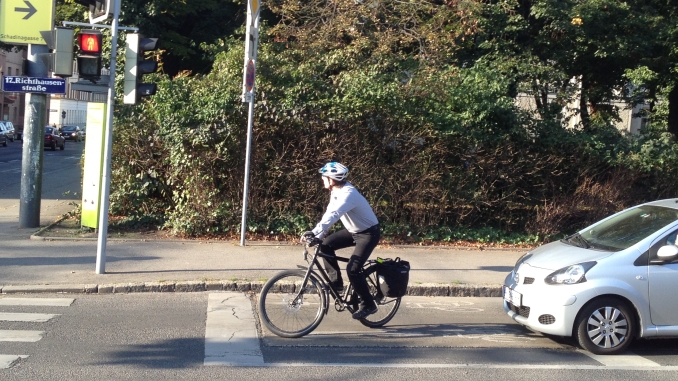
I got a nice illustration from Roland about the allocation of space (inspired by Copenhagenize)
It is part of the Vienna main cycle route network (solid red lines) which goes diagonally across it. However there are gaps (to put in nicely) so getting across here involved illegal and creative use of the road and footpath. It was interesting to see all the junction free-styling that went on here because every time I thought I knew all possible ways of coping with this junction someone would surprise me with a new way...
It was an appalling design for cycling and the new design seams to be no more than basically painted on guides for some of the free-style moves. The new design will not stop illegal behaviour because cyclists will go with the first green light to get diagonally across the two stage stop diagonal crossing. So this means half the time they will go anti-clockwise (sort of legal) and half the time anticlockwise (illegal) around. The new design is confusing and creates dangerous conflict merge point just after the junction on Rennweg in both directions.
Lets remember that Vienna is a city that wants to half motor car use and promote cycling. If we areto take these claims seriously then we need more than confusing conflict inducing paint.
What I would like to do is explain why I think this mess was created and how I would try to pragmatically solve the issues better in a cost effective way. I am sure there are many many solutions and I would love to post some options here from others if they propose them.
How did this mess happen.
If a city does not have the political strength to put separate quality cycle paths on main roads you end up with a separate network for cycling using quiet roads and back streets. This can work if the routes are direct and where people want to go. You can tell which routes people want to go because these routes become main roads... However the separate route (the red cycling network) is not too bad but it has to cross (in this case diagonally) the main roads. This creates very complicated junctions. So you need a solution for this. Unfortunately Vienna does not even have a good solution for simple main road junctions let alone very complex ones. Their best practice paint on version of the Copenhagen left hook or a bike box (ASL) are at best a "coping strategies".In order maximize the motor traffic capacity of a junction it is common for right turning motor traffic to have a green light at the same time a pedestrians get a green light to cross the road that the motor traffic is turning into. This is a bit dangerous but speeds are low and it does increase the motor traffic capacity of the junction if pedestrian numbers are low. However on a junction like this where there are a lot of pedestrians the turning motor traffic can not turn and is blocked by a stream of pedestrians. This means that extra queueing lanes are required going into the junction so that straight ahead motor traffic does not get blocked by the right turning traffic that is blocked by a stream of pedestrians it can not force it's way through. The requirement for as many queueing lanes into a junction means that all space available is consumed by queuing traffic lanes, (in this case up to 3 lanes!)
Through traffic is restricted in its turning movements on the junction to minimise left turning conflict with the trams and to further increase the capacity of the junction for motor traffic by using the surrounding small streets. This means that we end up with the ridicules through road Jacquingasse. This is a though road that has motor traffic funnelled on to it, It is unrestricted along its length with traffic lights and to slow down this rat run there are at least 2 large speed bumps. If you have thought traffic and speed bumps then you should realise something is very wrong.
How would the Dutch fix this mess?
One of the basics of Sustainable Safety is road classification. We will apply this and keep the through roads (Rennweg, Ungargasse and Fasangasse) as through roads. The other road will be access roads. We will allow vehicle turns in all directions on the Junction to facilitate movements and mean we cut out the rat running. This will also make our junction simple and manageable.We will use traffic control separation (traffic lights) to separate out the modes. Each mode (trams, motor traffic, cycles and pedestrians) have their own lights anyway. We will have an all green for cycles and pedestrians to make the diagonal crossing in one phase and to stop the turning right motor traffic blocking straight head flows. This removes the requirements for many queueing lanes and frees up lots of space.
I simple North-South and East-West light phase with simultaneous green for pedestians and cyclists in all directions and a weighted priory (on the modes with the most users) will allow the timing to be optimised to increase the people movements through the junction (at different times of day...). I suspect this will increase its people capacity even if the metal box capacity is reduced slightly. This can be optimised with the help of computer models but that is beyond the scope of this blog.
Rather than a roundabout I will stick to the classic Dutch protected intersection which is similar to the current layout an does not require expensive tram track changes.
I will also connect the current cycle network put proper cycle paths along Rennweg where they are desperately missing especially towards the centre.
Here is a basic sketch of my cycle infrastructure layout.
The only traffic lights are on the junction. This removes the one at Jacquingasse.
The bi directional path across the junction is maybe not needed with the all green light for cyclists and pedestrians. I have drawn it to help indicate desire lines more than anything.
The detailed curb layout would be like the protected intersection which explains this well. You probably do not need the tracks across the junction with a proper all green design.
Jacquingasse turns into a proper Fahradstrasse with no though traffic. This would help create a bike route up to the Sud Bahnhof that is motor traffic free but the other end needs sorting out too... However it means Fasangasse can remain the way it is if this is done well.
The above is very basic and needs a lot of detailed work but I hope it shows that:
- Road Function and traffic routing are very very important.
- There is always space for cycling infrastructure if we have the balls to rethink junction capacity.
Have a go yourself.
Update 2014.09.10
It is clear that some people do not really see the problem with this Junction. It is true that by Vienna standards it is not particularly bad but I thought it might help to do a couple of very amateur videos to try and communicate why it is not particularly good either.
Update 2014-09-12
I got a nice illustration from Roland about the allocation of space (inspired by Copenhagenize)
Tuesday, 8 July 2014
The definitive history of Viennese cycling infrastructure
This is NOT the definitive history of Viennese cycling infrastructure and I do not know the full story but here are two great films and my understanding of the context.
Back in 1969 the city was full of cars! The City realised this was not going to be a future-proof solution. What Vienna needed was an underground network and so they built one. Vienna now has the best Public Transport in the world (my world at least).
The focus on public transport, the dismantling of cycle infrastructure and the cultural aspirations of motor car ownership meant bikes were bullied off the road.
Then came the 70s and the problems of car use and oil dependence reignited the mobility discussion. By then there was 0.01 % modal share for bikes and those that rode used illegal routes and survival tactics.
Since then the City has had some good initiatives to accommodate cycling with some very good bits of cycle path and some very nice cycling environments. However these initiatives are like the current network, half hearted, disconnected and do not really join up or have any consistency or quality.
Cycling is back in fashion across the developed world as more and more realise the mobility potential cycling brings to urban spaces. Vienna has marketed cycling well and modal share is at about 5%. There have been some pathetic attempts to improve the cycling infrastructure and to connect up the network which fail as soon as there is any resistance due to a lost parking space.
Cyclists that have coped with and perfected cycling in the Vienna cycling environment are resistant to more poor quality cycling infrastructure which often disadvantages them compared to riding on the road.
Pedestrians and cyclists fight for space on the once illegal survival routes but now official cycle/foot paths.
Austrian traffic planners are influenced by German Cycle planning which is very orientated to deigning roads for cars and footpaths for pedestrians and no understanding of human factors or their Dutch neighbour's solutions.
Austrian political cock blocking and the 23 Vienna district micro politics creates an environment that is very resistant to change.
Again the City is at a turning point as it considers mobility for the future. It realises that the city is truly saturated with cars there is nothing it can do to accommodate more, so it hopes to half the number of cars in 15 years. That leaves public transport, cycling and walking as the only realistic mobility options.
Public transport costs billions but Vienna is very good at it and the politics for public transport are very well established and unquestionable. Cycling is nothing but problems and conflict but it is very cheap, promotes health, inclusive.... bla bla bla...
If you were Mayor what would you do? Invest in public transport help your friends and profit from established relationships and structures or tackle the cycling mess and make a real difference with a coherent connected quality network despite resistance from all groups (even cyclists!)?
So it looks like we will get the U5. Vienna has underground lines from U1 to U6 but the U5 never got built. When it does we will have to find a new joke to play on tourists who ask "how do I get to ....". "You take the U5".
If Vienna really wants to half the car use and improve mobility it will have to invest heavily in public transport and cycling infrastructure and combine them to provide multi modal solutions. I believe cycling levels will increase (across Europe) but it seems that they will have to be increased as a result of individual sacrifice and determination rather than political leadership and technical expertise.
Back in 1969 the city was full of cars! The City realised this was not going to be a future-proof solution. What Vienna needed was an underground network and so they built one. Vienna now has the best Public Transport in the world (my world at least).
The focus on public transport, the dismantling of cycle infrastructure and the cultural aspirations of motor car ownership meant bikes were bullied off the road.
Then came the 70s and the problems of car use and oil dependence reignited the mobility discussion. By then there was 0.01 % modal share for bikes and those that rode used illegal routes and survival tactics.
Since then the City has had some good initiatives to accommodate cycling with some very good bits of cycle path and some very nice cycling environments. However these initiatives are like the current network, half hearted, disconnected and do not really join up or have any consistency or quality.
Cycling is back in fashion across the developed world as more and more realise the mobility potential cycling brings to urban spaces. Vienna has marketed cycling well and modal share is at about 5%. There have been some pathetic attempts to improve the cycling infrastructure and to connect up the network which fail as soon as there is any resistance due to a lost parking space.
Cyclists that have coped with and perfected cycling in the Vienna cycling environment are resistant to more poor quality cycling infrastructure which often disadvantages them compared to riding on the road.
Pedestrians and cyclists fight for space on the once illegal survival routes but now official cycle/foot paths.
Austrian traffic planners are influenced by German Cycle planning which is very orientated to deigning roads for cars and footpaths for pedestrians and no understanding of human factors or their Dutch neighbour's solutions.
Austrian political cock blocking and the 23 Vienna district micro politics creates an environment that is very resistant to change.
Again the City is at a turning point as it considers mobility for the future. It realises that the city is truly saturated with cars there is nothing it can do to accommodate more, so it hopes to half the number of cars in 15 years. That leaves public transport, cycling and walking as the only realistic mobility options.
Public transport costs billions but Vienna is very good at it and the politics for public transport are very well established and unquestionable. Cycling is nothing but problems and conflict but it is very cheap, promotes health, inclusive.... bla bla bla...
If you were Mayor what would you do? Invest in public transport help your friends and profit from established relationships and structures or tackle the cycling mess and make a real difference with a coherent connected quality network despite resistance from all groups (even cyclists!)?
So it looks like we will get the U5. Vienna has underground lines from U1 to U6 but the U5 never got built. When it does we will have to find a new joke to play on tourists who ask "how do I get to ....". "You take the U5".
If Vienna really wants to half the car use and improve mobility it will have to invest heavily in public transport and cycling infrastructure and combine them to provide multi modal solutions. I believe cycling levels will increase (across Europe) but it seems that they will have to be increased as a result of individual sacrifice and determination rather than political leadership and technical expertise.
Tuesday, 24 June 2014
Build it and they will park their bike on it.
They have a few put more bike racks at the Vienna Middle Station and normal behavior has changed!
Originally they totally forgot or ignored bike parking and there were many problems with badly parked bikes. This creative freestyle bike parking was normal behavior.
Now it is normal behavior to lock your bike to the excellent Vienna Bike racks. Here is a very bad video to illustrate the current situation.
The capacity of bike parking is already nearly full so if the city want to encourage more people to cycle and to park their bike responsibly they will have to double the parking capacity again, otherwise they will end up with lots of behavior arguments etc...
Originally they totally forgot or ignored bike parking and there were many problems with badly parked bikes. This creative freestyle bike parking was normal behavior.
Now it is normal behavior to lock your bike to the excellent Vienna Bike racks. Here is a very bad video to illustrate the current situation.
The capacity of bike parking is already nearly full so if the city want to encourage more people to cycle and to park their bike responsibly they will have to double the parking capacity again, otherwise they will end up with lots of behavior arguments etc...
Saturday, 7 June 2014
Lenaugasse
There is plenty to get frustrated about in Vienna but the summer is here and there are many cyclists enjoying the sunshine. So here is a positive blog post for a change.
Lenaugasse is a road came across by accident and it is wonderfully well designed residential access road. No through traffic and design that encourages a sense of place rather than a sense of get through here as quick as possible. It is officially a Wohnstrasse but they did more than put up a sign to make this space work.
It shows that they can get residential access roads right in the middle of Vienna if they try.
Lenaugasse is a road came across by accident and it is wonderfully well designed residential access road. No through traffic and design that encourages a sense of place rather than a sense of get through here as quick as possible. It is officially a Wohnstrasse but they did more than put up a sign to make this space work.
It shows that they can get residential access roads right in the middle of Vienna if they try.
Saturday, 24 May 2014
The corner Czapkagasse and Gärtnergasse
The layout at the corner Czapkagasse and Gärtnergasse and in particular the slight lines are really really bad. Bikes can not see the cars coming down Czapkagasse and the cars can not see the bikes coming from Landstrasse to Marxegasse. This gets particularly bad when parked high sided vans are on the corner.
In this video you see a cars swinging round the corner and then a second that stops to look properly but only looked right and so I had to emergency stop. It was after they started to turn left that I got eye contact.
I cycle this route most working days and have so many conflicts here with cars. I have also seen a cyclists sat on the curb with their beading head in their hands. This clearly needs a proper solution.
The main problem is that cars have to give way but the only indication is a triangle sign off to the side above parked cars.One third of drivers seam totally un-aware of this give way sign. Some kind of simple who has right of way system would
help enormasly...http://crowize-vienna. blogspot.co.at/2012/07/sharks- teeth.html and this would indicate to the cars they have to give way. The
triangle sign is totally useless and so are sharks teeth unless the implementation is consistent...
These turning cars have really really bad slight lines. They can not see bikes coming until they are already turning and then it is too late. Bike parking racks on the corner would stop vans parking there and improve the sight lines a lot. A raised junction like the one at Marxegasse and Gärtnergasse would help to reduce speed of cars.
This route is again used as a rat run and it is a main route for cyclists. This conflict of function multiples the design problem conflicts.
In my opinion there is a general problem that bikes are used in 30kmph
zones as traffic calming devices. This might work for most drivers who drive carefully in these unclear road mazes. However it does not create a good cycling environment if your role as a cyclists is to slow the aggressive drivers and you have to put your body in the way of their badly driven speeding cars.
Wednesday, 21 May 2014
The Dooring debate continures.
The standard modern best practice in Vienna is to paint narrow cycle lanes along side of parked cars forcing bikes into the door zone and induing very stressful and unpleasant conflict with overtaking cars. The debate about this kind of infrastructure continues in Vienna but in my mind there is no debate and this kind of infrastructure is nothing but total crap.
If they are painted wide enough with buffer zones either side they require more space than other proper solutions. If they are not wide enough they induce danger and conflict.They get parked in and provide a stressful experience to all cyclists and frustrate car drivers.
Maybe Peter Bals has a solution:
The Radwegbauprogramm 2014 consists mainly of this total crap so we can expect more doorings more conflict and increasing frustration and anger on the roads of Vienna for years to come.
If they are painted wide enough with buffer zones either side they require more space than other proper solutions. If they are not wide enough they induce danger and conflict.They get parked in and provide a stressful experience to all cyclists and frustrate car drivers.
Maybe Peter Bals has a solution:
The Radwegbauprogramm 2014 consists mainly of this total crap so we can expect more doorings more conflict and increasing frustration and anger on the roads of Vienna for years to come.
Wednesday, 9 April 2014
The reality of cycling in Vienna
3 days after her picture was taken riding this cargo bike this happens:
She went to work today, on her bike. At Waaggasse, a rather
small one-way street (bikes have the option to go both ways) a car gets
behind her and hits the horn a couple of times, then overtakes with
next to no space between her and the car. Also, we are in a 30km/h -
zone here and she is not a slow rider.
The car has to stop at the next crossing, She asks the driver what the fuck is up with him.He accelerates and hits her bike on purpose. She starts yelling at him, he hits her again, with the car, and speeds off.
She is in shock, but is alright.
And now off to the best part: 3 hours later, after finally
having calmed down, she goes to the police and tells them, what
happened. Their response: "You are lucky that you don't have to pay a
fee now, because you too have committed Fahrerflucht because you didn't
come to us within 20 minutes. Also it was an accident and nothing else
and will not be processed in any way."
A month ago my wife was hit by a car that overtook her as they dashed for the flashing green light. The car speed off and she recovered after a wobble and shock. She did not even bother reporting this to the Police who are clearly not interested in the safety of vulnerable road users. They are too busy at the moment controlling the size of bike reflectors and issuing fines.
This is the reality of cycling in Vienna and frankly it disgusts me. Campaigners and the City needs to stop all the "Safety in Numbers" bullshit and understand that "Safety is Numbers".
Tuesday, 8 April 2014
What is the point why do I bother?
After 2 years trying to understand and explain how the Dutch have been so successful with main stream cycling I still hear the same old excuses again and again and again and again....
The Cycling Agency have switched focus from last years marketing initiative to this years cyclist behavior initiatives. ( An idiotic blame the users response to their focus on marketing which unsurprisingly has not worked as well as they hoped... )
The politicians and planners continue to produce "cycling infrastructure" (or useless paint as it is more accurately known) that will only increase the polarizing conflict which the Cycling Agency continues to ignore.
Vienna is spending millions and millions on the rebuilding of motor way connections and considering spending billions on building a new U-Bahn line, while ignoring the value for money benefit of good cycling infrastructure.
The Rad Lobbies are still struggling to decide if useless paint is a good idea or not.
The pathetic political cock blocking continues in the MaHü even after the referendum resulted in a close win for the new people friendly street with bikes.
As Chris Cummings summaries here: http://fm4.orf.at/stories/1736436/
"After the marketing frenzy of the last years’ Vienna Year of the Bicycle (Radjahr) participation rates rose from 6.3% to 6.4% in comparison with the previous year. That is hardly a revolution and the number of journeys made by cars rose instead of falling."
So what is the point why do I bother?
I am now again able to answer that question after one of the better marketing initiatives: "The Rad parRade". I and ~9000 others rode around the car free ring and it was wonderful. I went with a mate and his family and we even got our picture in a populist tabloid paper. I am the chap chatting to the wonderful Margit who invests a great deal of time and energy getting people together and patiently trying to improve cycling conditions.

Seeing kids riding independently and remembering how that freedom feels has reminded my why I bother.
The point is we are doing this for the future generations who just need the opportunity and they will be able to enjoy mobility. Our idiotic overuse of cars and road design has destroyed cycling as an option for most of the population. Build the infrastructure and make cycling safe, pleasant, fast, direct and easy and people will choose that option and we can all reap the many benefits of their modal shift.
We have to keep trying to tell the main stream cycling success story because it is a damn good one.
The Cycling Agency have switched focus from last years marketing initiative to this years cyclist behavior initiatives. ( An idiotic blame the users response to their focus on marketing which unsurprisingly has not worked as well as they hoped... )
The politicians and planners continue to produce "cycling infrastructure" (or useless paint as it is more accurately known) that will only increase the polarizing conflict which the Cycling Agency continues to ignore.
Vienna is spending millions and millions on the rebuilding of motor way connections and considering spending billions on building a new U-Bahn line, while ignoring the value for money benefit of good cycling infrastructure.
The Rad Lobbies are still struggling to decide if useless paint is a good idea or not.
The pathetic political cock blocking continues in the MaHü even after the referendum resulted in a close win for the new people friendly street with bikes.
As Chris Cummings summaries here: http://fm4.orf.at/stories/1736436/
"After the marketing frenzy of the last years’ Vienna Year of the Bicycle (Radjahr) participation rates rose from 6.3% to 6.4% in comparison with the previous year. That is hardly a revolution and the number of journeys made by cars rose instead of falling."
So what is the point why do I bother?
I am now again able to answer that question after one of the better marketing initiatives: "The Rad parRade". I and ~9000 others rode around the car free ring and it was wonderful. I went with a mate and his family and we even got our picture in a populist tabloid paper. I am the chap chatting to the wonderful Margit who invests a great deal of time and energy getting people together and patiently trying to improve cycling conditions.

Seeing kids riding independently and remembering how that freedom feels has reminded my why I bother.
The point is we are doing this for the future generations who just need the opportunity and they will be able to enjoy mobility. Our idiotic overuse of cars and road design has destroyed cycling as an option for most of the population. Build the infrastructure and make cycling safe, pleasant, fast, direct and easy and people will choose that option and we can all reap the many benefits of their modal shift.
We have to keep trying to tell the main stream cycling success story because it is a damn good one.
Wednesday, 19 February 2014
Circular Vehicling Campaigning.
This is a tale of 3 roundabouts:
One near Vienna that has shown to be good for cars but dangerous for cyclists.
http://diepresse.com/home/panorama/oesterreich/1564400/Tulln_Kreisverkehr-fur-Radler-unsicherer
and one in the UK designed by an bunch of cretins, to be paid for out of cycling infrastructure funds and approved by cycling organisations.
http://departmentfortransport.wordpress.com/2014/02/18/bedford-borough-council-traffic-department-you-are-a-bunch-of-cretins/
Both are designed purely for cars and both have cycling organisations encouraging cyclists to take the lane for better safety.
I could go on and try to explain why this is stupid but Austrian and some British cycle campaigning organisations clearly think they know better than the Dutch. They are clearly not listening to anyone who tries to explain why the Dutch systems work and that putting yourself in the way of something dangerous is not a natural response normal people will choose as a pleasant method of stopping that thing from hurting them.
The third roundabout is the downward spiral of the road environment. If we really care about main stream cycling, and want the society our children live in to benefit from its many positive effects, then we have to break the circle of expecting cyclists to behave like cars and drivers to behave like cycles. This only creates more people forced to use cars even for short urban trips and road design focused on coping with higher and higher volumes of dense motor traffic. The resulting conflict and pressure for space polarizes groups and makes sensible policy politically impossible.
One near Vienna that has shown to be good for cars but dangerous for cyclists.
http://diepresse.com/home/panorama/oesterreich/1564400/Tulln_Kreisverkehr-fur-Radler-unsicherer
and one in the UK designed by an bunch of cretins, to be paid for out of cycling infrastructure funds and approved by cycling organisations.
http://departmentfortransport.wordpress.com/2014/02/18/bedford-borough-council-traffic-department-you-are-a-bunch-of-cretins/
Both are designed purely for cars and both have cycling organisations encouraging cyclists to take the lane for better safety.
I could go on and try to explain why this is stupid but Austrian and some British cycle campaigning organisations clearly think they know better than the Dutch. They are clearly not listening to anyone who tries to explain why the Dutch systems work and that putting yourself in the way of something dangerous is not a natural response normal people will choose as a pleasant method of stopping that thing from hurting them.
The third roundabout is the downward spiral of the road environment. If we really care about main stream cycling, and want the society our children live in to benefit from its many positive effects, then we have to break the circle of expecting cyclists to behave like cars and drivers to behave like cycles. This only creates more people forced to use cars even for short urban trips and road design focused on coping with higher and higher volumes of dense motor traffic. The resulting conflict and pressure for space polarizes groups and makes sensible policy politically impossible.
Friday, 14 February 2014
MaHü
Soon 2 districts in Vienna vote on the MaHü project. This has created a lot of discussion and interest about public space and it's use, which I think is a really good thing.
I have my opinion and I am interested in the discussion. However when you engage with some activists who are opposing traffic calming you quickly realise they have no problem with making totally wild statements that have no references or basis on reality.
There is a very patient, well written and researched blog post here: http://blog.sektionacht.at/2014/02/zwoelf-mythen-zur-neugestaltung-der-mariahilfer-strasse/ (which I hope you will read and use for those bullshit bingo moments).
I try to keep an open mind but one side of the argument is frankly completely fucking nuts, and has more to do with political polarizing than anything I understand to be based on reality.
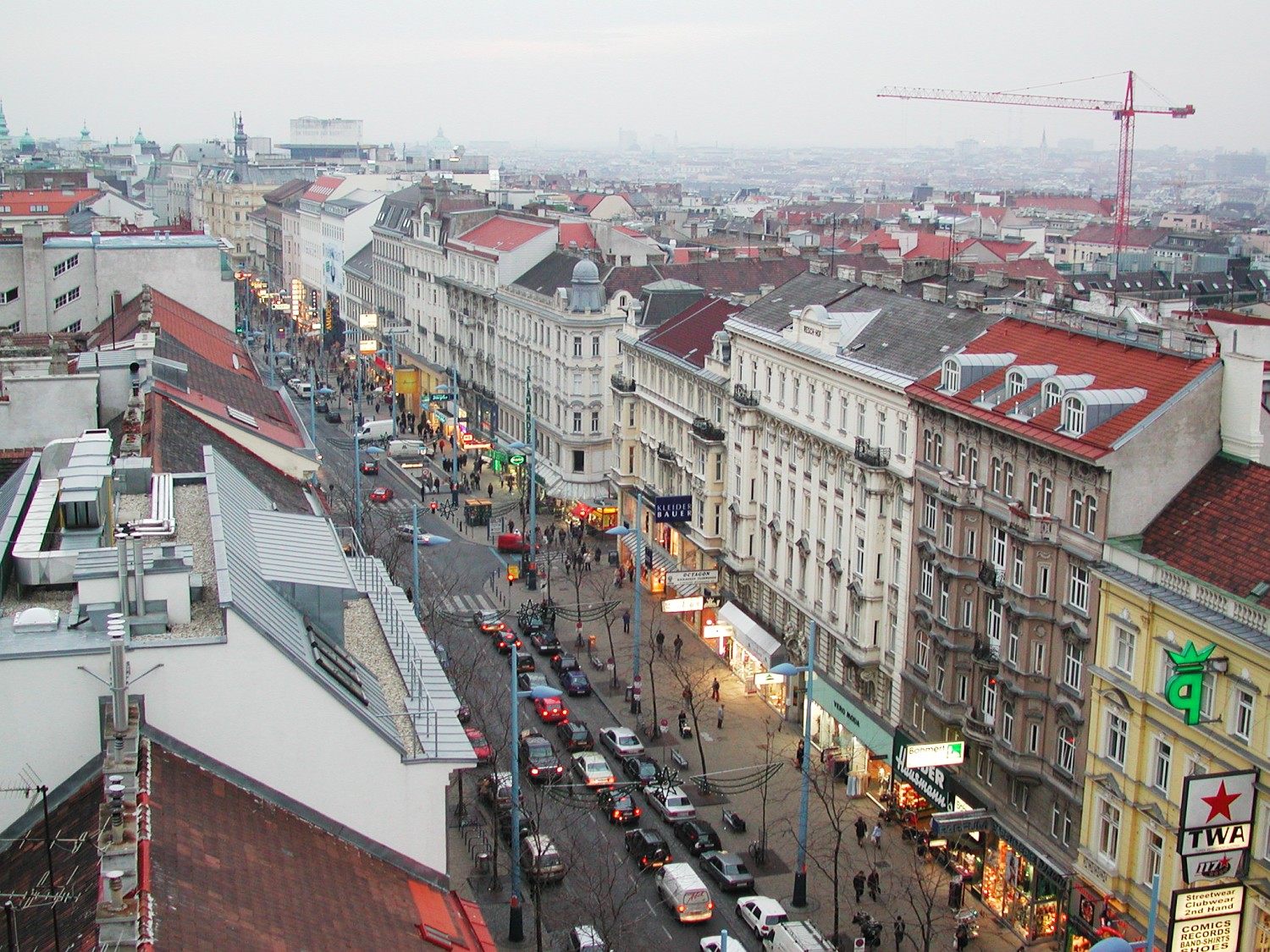
Picture from wikipedia showing the the apparently good old days when motor traffic was free to create traffic Jams (while looking for parking spaces), buses got delayed and the (very few) cyclists got doored, while pedestrians squeezed along crowded footpaths.
The vision that came out of the Dialogue Process that will be fully implemented if those crazy Greens are allowed to take away freedom and ruin Vienna.
I have my opinion and I am interested in the discussion. However when you engage with some activists who are opposing traffic calming you quickly realise they have no problem with making totally wild statements that have no references or basis on reality.
There is a very patient, well written and researched blog post here: http://blog.sektionacht.at/2014/02/zwoelf-mythen-zur-neugestaltung-der-mariahilfer-strasse/ (which I hope you will read and use for those bullshit bingo moments).
I try to keep an open mind but one side of the argument is frankly completely fucking nuts, and has more to do with political polarizing than anything I understand to be based on reality.
Picture from wikipedia showing the the apparently good old days when motor traffic was free to create traffic Jams (while looking for parking spaces), buses got delayed and the (very few) cyclists got doored, while pedestrians squeezed along crowded footpaths.
The vision that came out of the Dialogue Process that will be fully implemented if those crazy Greens are allowed to take away freedom and ruin Vienna.
Saturday, 18 January 2014
Space for Cycling
The LCC's Space for Cycling Campaign I think is fantastic. It deals head on with the real political issue that is important if cycling conditions are to improve and numbers enjoying cycling are to increase. Space needs to be allocated to cycling so that proper infrastructure can be built. The space is there but the political battle of who benefits from it needs to be won.
Here is my bike on the Prater Hauptallee in Vienna with my Space For Cycling Bike Plate.
The Cycling Embassy of Great Britain have produced a fantastic document that explains exactly the technical issue that needs to be addressed. The Dutch System of Sustainable Safety and CROW based road design needs to be implemented. They have managed to put everything I hoped this blog would communicate in one PDF file:
There is certainly enough frustration amongst London cyclists with their "Die-in Protests" and more widespread understanding of the solutions available thanks to the View From a Cycle Path and Bicycle Dutch Blogs amongst others.
Austria built an empire by compromise, marriage and diplomacy. The Brits built one with aggression and violence. Maybe I am a Brit in the wrong empire but I am very impressed and totally support this style of head on political and technical campaigning. Compromise does not work in road design it results in an un-clear mess of function and usage that no amount of useless paint can fix. Dealing with the issues head on has got to be more effective than continuing to gently encourage with marketing.
I will watch very closely in 2014 to see how the situation in my home country develops.
Here is my bike on the Prater Hauptallee in Vienna with my Space For Cycling Bike Plate.
The Cycling Embassy of Great Britain have produced a fantastic document that explains exactly the technical issue that needs to be addressed. The Dutch System of Sustainable Safety and CROW based road design needs to be implemented. They have managed to put everything I hoped this blog would communicate in one PDF file:
There is certainly enough frustration amongst London cyclists with their "Die-in Protests" and more widespread understanding of the solutions available thanks to the View From a Cycle Path and Bicycle Dutch Blogs amongst others.
Austria built an empire by compromise, marriage and diplomacy. The Brits built one with aggression and violence. Maybe I am a Brit in the wrong empire but I am very impressed and totally support this style of head on political and technical campaigning. Compromise does not work in road design it results in an un-clear mess of function and usage that no amount of useless paint can fix. Dealing with the issues head on has got to be more effective than continuing to gently encourage with marketing.
I will watch very closely in 2014 to see how the situation in my home country develops.
Thursday, 21 November 2013
Beatrixgasse
Beatrixgasse is a 30kmph one way road with cycling allowed in both directions so it should be good for cycling. Most working days I ride along a bit of it and I absolutely hate it. It is a great example of bad cycling infrastructure even if at first glance it looks perfect.
There is a problem and that is the quickest way to drive from A to B is not the 50kmph limit main multi-lane road (red line) due to number of traffic lights (red dots). It is the 30 kmph Beatrixgasse. Drivers know this and use this shortcut as a Rat Run.
If you are trying to drive from A to B as quickly as possible the last thing you want is a bloody cyclist in the way. Cycling fast here helps to reduce this conflict but this is not so easy up hill. Most drivers squeeze past carefully but some squeeze past even if there are obstacles caused by long parked vehicles or cyclists speeding down the hill in the other direction.
There is a very nasty pinch point going into the road as cyclists merge with cars who started from the same red light, which results in a lot of blind overtakes. I am sure it is just a matter of time before I or someone else gets caught in this trap and has a 60kmph impact head on collision with a car.
Yes drivers should be patient and not make cyclists feel uncomfortable or endangered. However they are taking a short cut and want to get though as fast as possible. Asking them to be patient is asking them to ignore their current priorities and objectives. Behavior based solutions will not work no matter how much useless paint you put on the road.
The Function of the road is clearly not clear and it is conflicting.
What would the Dutch do? I believe they would stop the Rat Running. This can be done very easily using the one way system like this.
This allows residents or people to access everywhere but stops the road being a short cut for motor traffic. This would cause a slight inconvenience for some residents that need a longer distance to access their property but in return they have a very very low traffic road to live on.
Dutch Sustainable Safety aims to reduce conflict with clear road function. Access roads are not also Through Roads. Conflict of function leads to conflict of design and use and that creates conflict between the users. This in turn leads to unpleasant danger as different needs are "negotiated". I have had more than enough of "negotiating" with drivers here...
There is a problem and that is the quickest way to drive from A to B is not the 50kmph limit main multi-lane road (red line) due to number of traffic lights (red dots). It is the 30 kmph Beatrixgasse. Drivers know this and use this shortcut as a Rat Run.
If you are trying to drive from A to B as quickly as possible the last thing you want is a bloody cyclist in the way. Cycling fast here helps to reduce this conflict but this is not so easy up hill. Most drivers squeeze past carefully but some squeeze past even if there are obstacles caused by long parked vehicles or cyclists speeding down the hill in the other direction.
There is a very nasty pinch point going into the road as cyclists merge with cars who started from the same red light, which results in a lot of blind overtakes. I am sure it is just a matter of time before I or someone else gets caught in this trap and has a 60kmph impact head on collision with a car.
Yes drivers should be patient and not make cyclists feel uncomfortable or endangered. However they are taking a short cut and want to get though as fast as possible. Asking them to be patient is asking them to ignore their current priorities and objectives. Behavior based solutions will not work no matter how much useless paint you put on the road.
The Function of the road is clearly not clear and it is conflicting.
What would the Dutch do? I believe they would stop the Rat Running. This can be done very easily using the one way system like this.
This allows residents or people to access everywhere but stops the road being a short cut for motor traffic. This would cause a slight inconvenience for some residents that need a longer distance to access their property but in return they have a very very low traffic road to live on.
Dutch Sustainable Safety aims to reduce conflict with clear road function. Access roads are not also Through Roads. Conflict of function leads to conflict of design and use and that creates conflict between the users. This in turn leads to unpleasant danger as different needs are "negotiated". I have had more than enough of "negotiating" with drivers here...
Sunday, 3 November 2013
Ignore the problem and blame the users.
Vienna has spent huge amounts of money renovating it's train stations. Wien Mitte is a central train station with a new shopping Mall so it is a very important destination as well as a transport hub. Even before it opened bikes got locked to scaffolding and sign posts as there was no where else to leave your bike. It was a mess but you have to make a mess to build something better. However once opened the additional bike parking provided was pathetic. So understandably creative bike parking continued. Reluctantly the city provided more bike parking but this too filled up instantly and the creative bike parking continued.
There are problems with the creative bike parking that are really well communicated in this video by Wolfgang Kremser:
Wolfgang has a very good point and we should all consider his perspective when we park our bikes.
BUT
There is a chronic shortage of bike parking due to what can only be called a planning cock up. Lets fix this problem, and not blame the cyclists for creative solutions to someone else's mistake. Unfortunately the issue is being hijacked to force number plates on cyclists as part of an ongoing hate campaign!
http://tvthek.orf.at/programs/1339-Buergeranwalt/episodes/7039885-Buergeranwalt/7040017-Kennzeichen-fuer-Drahtesel
I will not even bother to answer why this is pathetic because the idea is not worth any time.
I went to the Wien Mitte this weekend a few times after the TV program aired and there was always a different bike locked to this very post. So the TV program had zero effect on behaviour apart from to help fuel anti-cyclists hate politics.
How can the most basic planning cock up be allowed to turn into a debate about user behaviour? If I was blind I would be furious that I had to put up with this crap. There is no solution to the problem yet, and there will be no solution to the problem until we stop these pathetic hate political arguments about the behaviour of minority groups and find good technical planning solutions to the problem that has been created due to planning incompetence.
UPDATE 4.11.2013 from WIEN MITTE The Mall:
"Dear Doug, currently Stadt Wien is reconstructing Gigergasse. There will be more bike stands, as soon as their work is finished. We assume that it'll last till the beginning of the new year."
Fantastic. This will hopefully be a real solution. Thanks Wien Mitte Shopping Mall.
There are problems with the creative bike parking that are really well communicated in this video by Wolfgang Kremser:
Wolfgang has a very good point and we should all consider his perspective when we park our bikes.
BUT
There is a chronic shortage of bike parking due to what can only be called a planning cock up. Lets fix this problem, and not blame the cyclists for creative solutions to someone else's mistake. Unfortunately the issue is being hijacked to force number plates on cyclists as part of an ongoing hate campaign!
http://tvthek.orf.at/programs/1339-Buergeranwalt/episodes/7039885-Buergeranwalt/7040017-Kennzeichen-fuer-Drahtesel
I will not even bother to answer why this is pathetic because the idea is not worth any time.
I went to the Wien Mitte this weekend a few times after the TV program aired and there was always a different bike locked to this very post. So the TV program had zero effect on behaviour apart from to help fuel anti-cyclists hate politics.
How can the most basic planning cock up be allowed to turn into a debate about user behaviour? If I was blind I would be furious that I had to put up with this crap. There is no solution to the problem yet, and there will be no solution to the problem until we stop these pathetic hate political arguments about the behaviour of minority groups and find good technical planning solutions to the problem that has been created due to planning incompetence.
UPDATE 4.11.2013 from WIEN MITTE The Mall:
"Dear Doug, currently Stadt Wien is reconstructing Gigergasse. There will be more bike stands, as soon as their work is finished. We assume that it'll last till the beginning of the new year."
Fantastic. This will hopefully be a real solution. Thanks Wien Mitte Shopping Mall.
Subscribe to:
Posts (Atom)